
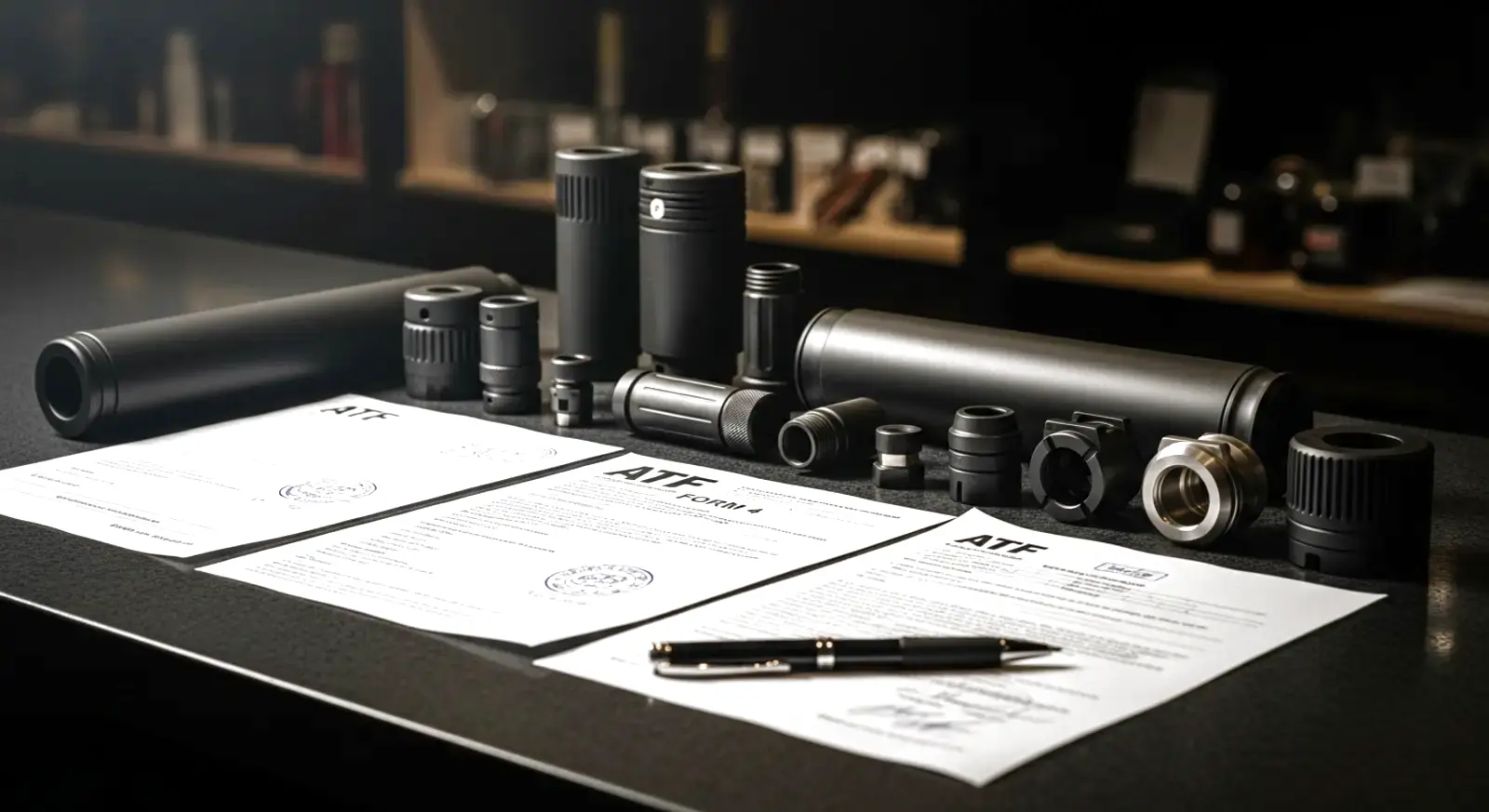
Class 3 and NFA compliance, explained for FFLs
If your gun store deals in suppressors, short-barreled rifles, or other National Firearms Act items, you are working under a separate set of rules on top of your regular FFL duties. This is a plain-English overview of how Class 3 and NFA compliance works, and where the 4473 fits.
What NFA and Class 3 mean
The National Firearms Act, or NFA, regulates a specific set of items that generally includes suppressors, short-barreled rifles, short-barreled shotguns, machine guns, destructive devices, and any other weapons. In the trade, dealers who handle these items are often called Class 3 dealers.
Plain language
Class 3 is everyday shorthand. What actually lets an FFL deal in NFA items is registering as a Special Occupational Taxpayer, described next.
The SOT: becoming an NFA dealer
To deal in NFA items, an FFL registers as a Special Occupational Taxpayer, or SOT, and pays an annual tax. The SOT is what gives a licensed dealer the ability to buy, sell, and transfer NFA items as part of the business.
ATF Form 3: dealer to dealer
When an NFA item moves between two qualified parties, such as from a distributor to your store, that transfer generally uses ATF Form 3. Between eligible SOT dealers, this transfer is typically tax-free, which is one reason stocking NFA inventory is workable for a dealer.
ATF Form 4: transfer to a customer
When you transfer an NFA item to a customer who is not a licensee, the transfer generally goes on ATF Form 4 and carries a tax stamp, commonly the $200 stamp. Form 4 transfers are approved by the ATF before the item can be handed over, so there is a waiting period between purchase and pickup.
Where the 4473 still fits
The NFA paperwork does not replace the 4473. When your customer comes back to pick up an approved NFA item, that transfer is still a firearm transfer, so they complete an ATF Form 4473 at pickup just like any other. Handling both the NFA process and the 4473 is part of running a compliant Class 3 counter.
How e4473 helps a Class 3 counter
Because e4473 is built into the Bravo Store Systems point of sale, the 4473 side of an NFA transfer runs the same clean, guided way as any other transfer, and the A&D Book is designed to keep serialized inventory in sync. That keeps the firearm-transfer records audit-ready while you manage the NFA paperwork alongside them.
A note on responsibility
NFA rules are detailed and change over time. This overview is general information, not legal advice. Confirm current requirements with the ATF or qualified counsel for your situation.
Free personalized report
See where your workflow leaks time and inspection risk
Five questions about how your store runs 4473s, the A&D Book, storage, NICS delays, and error-catching — scored the same way for every dealer, with findings tailored to a class 3 / nfa dealer. Printable, free, no sales call required.
Get my FFL workflow reportNot sure how a rule applies to your shop?
Send us the compliance question that is keeping you up at night. We have worked with FFLs since 2011, and our team will follow up by email. This is general guidance, not legal advice.
Choose your next step
Not everyone wants the same next step. Pick whichever is easiest — every option gets you a real answer from the e4473 team, not a drip campaign.
A real walkthrough with the team behind e4473 — free, no obligation. You’ll see the 4473 flow, A&D sync, and inspection retrieval on transactions like yours, then decide if it’s worth a longer look.
“Bravo E4473 saved us from FFL revocation. The ATF walked in unannounced, and we had everything they needed in seconds. Not minutes. Seconds.”
Frequently asked questions
Do NFA transfers still require a 4473?
Yes. When an approved NFA item is transferred to a non-licensee at pickup, the customer completes an ATF Form 4473 for that firearm transfer, in addition to the NFA paperwork.
What is the difference between Form 3 and Form 4?
Form 3 generally covers a transfer between qualified parties, such as distributor to dealer, and is typically tax-free between eligible SOT dealers. Form 4 generally covers a transfer to a customer who is not a licensee and carries a tax stamp.
Do I need an SOT to sell suppressors?
Dealing in NFA items such as suppressors generally requires the proper FFL and registration as a Special Occupational Taxpayer. Confirm the exact requirements for your license and location with the ATF.
Keep your 4473 records audit-ready
Get a demo and see how e4473 handles the 4473 side of every transfer, including NFA pickups, inside the Bravo Store Systems point of sale.