
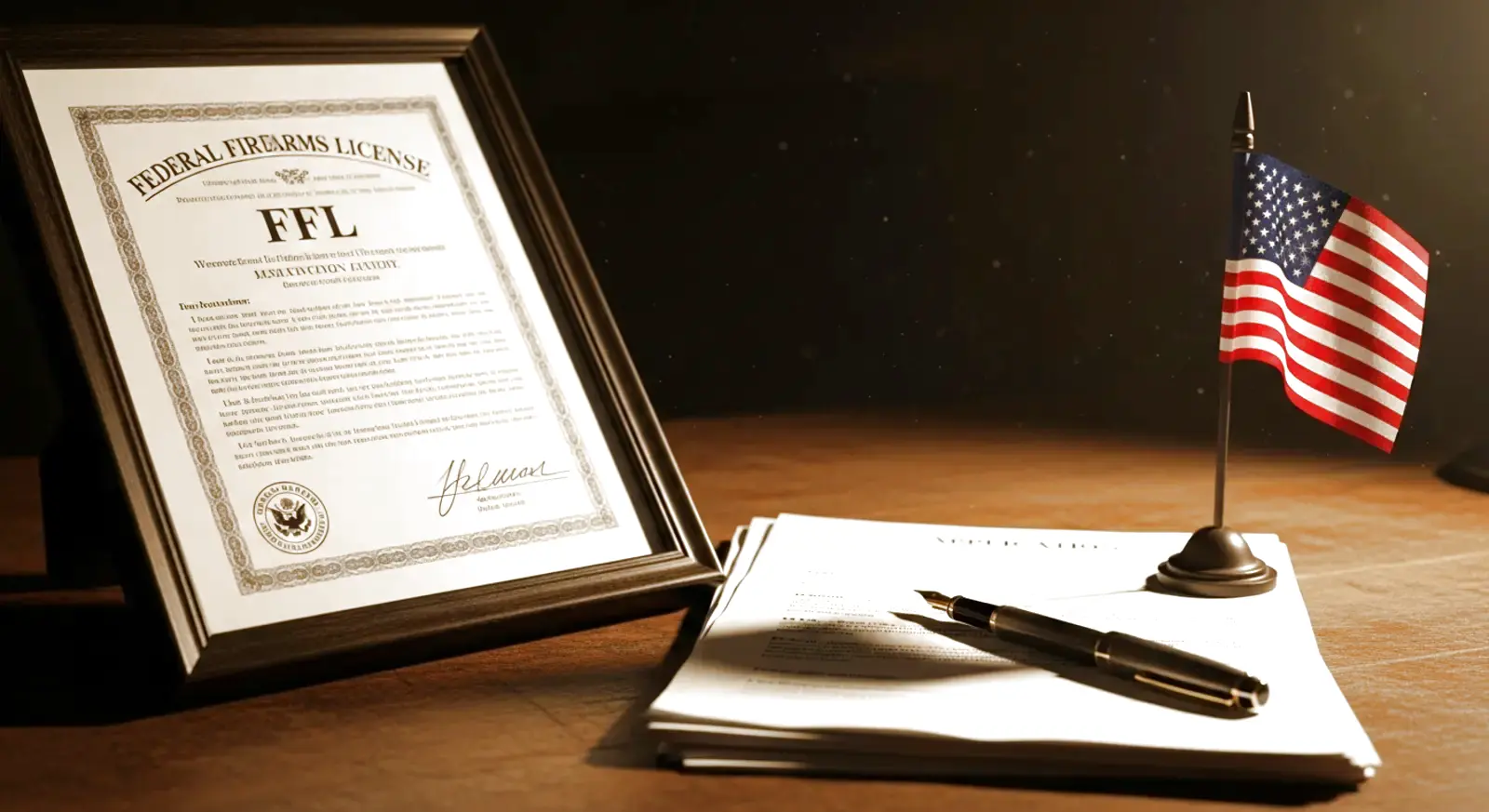
Home-Based FFL Requirements: Rules, Approval, and What ATF Expects
You can run a licensed firearms business from home instead of paying for a commercial storefront. It's a legitimate and common way to start, often called a home-based or kitchen-table FFL. But the ATF holds you to the same standards as any other licensee. Before you apply, check your eligibility, prove genuine business intent, clear local rules, and be ready for the recordkeeping duties that start when your license is issued.
Is a home-based FFL actually allowed?
Yes. Federal law doesn't require a commercial storefront, so a home-based premises can qualify for an FFL. You do need a specific, fixed location where you conduct business and keep records. Operating there also can't violate state or local law. That's where many applications get tripped up, because zoning, permits, and homeowner association rules are handled locally.
Two separate questions
The ATF asks whether you meet federal requirements. Your city or county decides whether a firearms business may operate at your address. You have to satisfy both. Review the local side in detail in our guide to home-based FFL zoning before you apply.
Basic eligibility to hold a license
Working from home doesn't change the personal eligibility rules. To hold an FFL, you generally must be at least 21, be legally allowed to possess firearms, have a premises where you intend to do business, and not have willfully violated the Gun Control Act. You also certify that you'll comply with all applicable laws.
- You are at least 21 years old and can lawfully possess firearms.
- You have a fixed premises, which can be a residence, where you will conduct business and store records.
- Operating a firearms business at that premises does not violate state or local law.
- You intend to engage in the business of dealing firearms, not simply to buy for your personal collection.
The business-intent requirement
An FFL lets you engage in the business of dealing firearms with the principal objective of livelihood and profit. It isn't a discount card for personal purchases. The ATF looks for genuine business intent. Applying only to buy guns for yourself at dealer cost isn't a lawful basis for a license. Plan to make sales, keep business records, and treat the license as the commercial activity it's meant to be.
Your records duties are identical to a storefront
This is what home-based dealers often underestimate: a kitchen-table FFL carries exactly the same recordkeeping obligations as a large retail shop. You must complete a Form 4473 for every transfer, run the required background check, and log every firearm coming in and going out in your acquisition and disposition (A&D) Book. Keep those records available for inspection. When you eventually close the business, the records go to the ATF Out-of-Business Records Center.
A home-based shop usually has fewer people to double-check paperwork. e4473 is the electronic ATF Form 4473 built into the Bravo Store Systems point of sale. It keeps the 4473, NICS, electronic A&D Book, and permanent encrypted cloud storage in one record. A one-person shop doesn't have to stitch together a paper binder, spreadsheet, and separate background-check step. For a closer look, see our overview of software for home-based FFLs.
Yes, home premises get inspected
Holding your license at home doesn't exempt you from ATF compliance inspections. An Industry Operations Inspector can visit your licensed residence and review your bound book and 4473s just as they would at a storefront. Know what to expect, and you'll remove most of the stress. We cover it in do home-based FFLs get inspected.
Frequently asked questions
Can I legally run an FFL from my home?
In many places, yes. Federal law allows a licensed firearms business at a fixed residential premises as long as it doesn't violate state or local law. You still need genuine business intent and a specific location where you keep records and conduct business. Always confirm local zoning and permit rules before applying.
Are the rules different for a home-based FFL versus a storefront?
The recordkeeping and compliance rules are the same. You complete a Form 4473 and run a background check for every transfer, maintain an A&D Book, keep records available for inspection, and surrender records to the ATF when you close. The main difference is the premises, which brings in local zoning considerations.
Can I get an FFL just to buy guns for myself?
No. An FFL is a license to engage in the business of dealing firearms with the objective of livelihood and profit. Applying solely to buy firearms for a personal collection is not a lawful basis for a license, and the ATF looks for genuine business intent.
Do home-based FFLs get inspected by the ATF?
Yes. A residence used as the licensed premises can be inspected like any other FFL. An inspector may review your bound book, your 4473s, and your storage. Keeping clean, organized records is the best way to be ready at any time.
How should a one-person home FFL keep records?
A one-person shop doesn't have a second set of eyes. Keeping the 4473, NICS, and A&D Book in one record, like e4473 built into the Bravo point of sale, reduces the paperwork errors that inspections most often catch.
See how a home-based FFL stays inspection-ready
Book a no-obligation 15-minute demo and see how e4473 keeps the 4473, NICS, and your A&D Book in one encrypted record, so a kitchen-table FFL runs as cleanly as a storefront.