
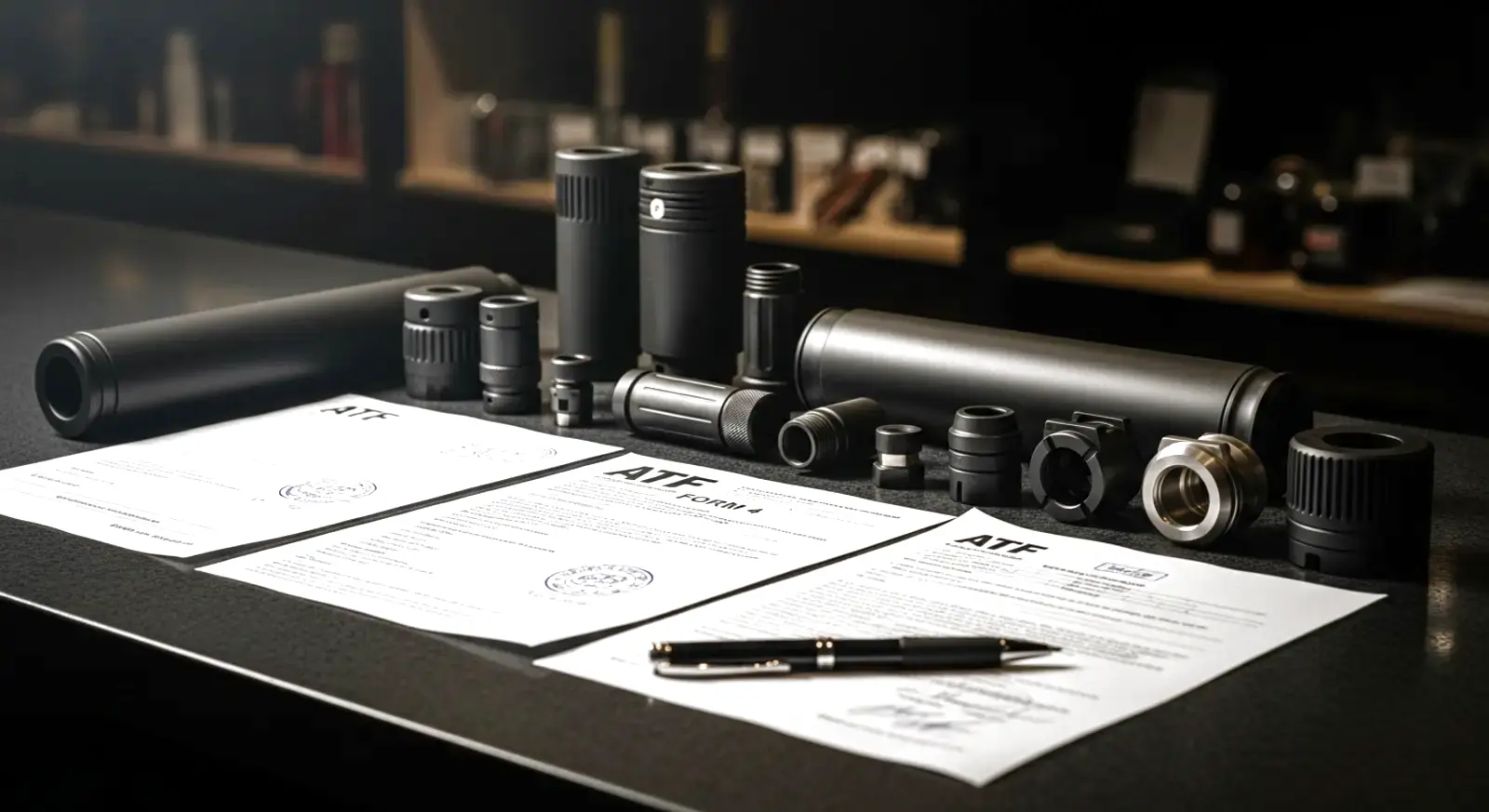
The NFA Tax Stamp Process for Dealers
At your counter, the NFA tax stamp process is about keeping each move on the right form. With SOT status, you move NFA items between licensees, hold inventory, and handle the final transfer to the buyer. Know which form applies and where the tax stamp lands, and your NFA records stay clean.
What the tax stamp is
A tax stamp is the ATF's approval and payment record for transferring or making an NFA item such as a suppressor, short-barreled rifle, short-barreled shotgun, or machine gun. The item cannot lawfully change hands until the applicable transfer is approved. But not every dealer move carries a tax stamp at that point. Transfers between qualified dealers work differently from transfers to a customer.
SOT status comes first
You can only receive NFA inventory tax-free between dealers once you hold SOT status. If you have not registered yet, start with how to become an SOT.
Form 3 versus Form 4
You'll work with Form 3 and Form 4 most often. The receiving party determines which one applies.
| Aspect | Form 3 | Form 4 |
|---|---|---|
| Who is involved | Dealer to dealer | Dealer to a customer |
| Tax due on the transfer | No | Yes |
| Typical use | Stocking inventory from a distributor or another SOT | Selling an NFA item to a non-licensee |
| Generally faster to process | Yes | No |
The Form 4 transfer to a customer is where the tax stamp is paid; dealer-to-dealer Form 3 transfers move NFA inventory between SOTs tax-free.
You stock NFA items by receiving them on a Form 3 from a distributor or another SOT with no transfer tax. Then you transfer the item to your customer on a Form 4, where the tax stamp applies. The customer generally pays the tax as part of the purchase.
How eForms changes the wait
NFA transfers are processed through the ATF eForms system. Filing electronically instead of on paper has meaningfully shortened approval times for many transfers. Faster Form 4 approvals get inventory off your shelf sooner. Dealer-to-dealer Form 3 transfers also move through eForms and tend to clear relatively quickly, which helps you restock.
For a fuller look, see how ATF eForms works and where the 4473 fits alongside it.
The dealer's role and recordkeeping
The tax stamp is tied to the customer's Form 4, but the transfer to a non-licensee still runs through your counter like any other firearm sale. The buyer completes a 4473, you run the background check, and the disposition is recorded in your bound book once the transfer is approved. Keep it on one connected record so the extra NFA paperwork doesn't create mismatches during an inspection.
With e4473's ATF 4473 software, the 4473, the sale, and a dedicated NFA electronic bound book share one record, so the acquisition on a Form 3 and the disposition on a Form 4 stay reconciled without hand-copying serial numbers. See logging NFA items in the bound book for how those entries work day to day.
Switching from FastBound?
Dealers moving their NFA records to e4473 get the 4473 software and bound book in one system — no double-entry. See the FastBound alternative comparison for what carries over and what changes.
Frequently asked questions
Do dealers pay a tax stamp on every NFA transfer?
No. Transfers between qualified SOT dealers on a Form 3 move NFA inventory tax-free. The tax stamp applies on the Form 4 transfer to a non-licensee customer, and the customer generally pays that tax as part of the purchase.
What is the difference between a Form 3 and a Form 4?
A Form 3 is a dealer-to-dealer transfer with no transfer tax, used to stock inventory. A Form 4 is a transfer to a customer that carries the tax stamp. Both are processed through ATF eForms.
How long does an NFA transfer take?
Timelines vary, but filing through ATF eForms has meaningfully shortened many approvals compared with paper. Dealer-to-dealer Form 3 transfers tend to clear relatively quickly, while Form 4 transfers to customers can take longer.
Does the customer still fill out a 4473 for an NFA item?
Yes. A transfer to a non-licensee still requires a completed 4473 and a background check at your counter, and the disposition is logged in your bound book once the transfer is approved.
Can I receive NFA inventory tax-free before I have SOT status?
No. Tax-free dealer-to-dealer transfers on a Form 3 require valid SOT status. Register and confirm your Special Occupational Tax status before receiving any NFA inventory.
Run NFA sales without the paperwork drift
e4473 keeps your 4473, sale, and NFA bound book in one reconciled record from Form 3 acquisition to Form 4 disposition. Book a no-obligation 15-minute demo to see it.