
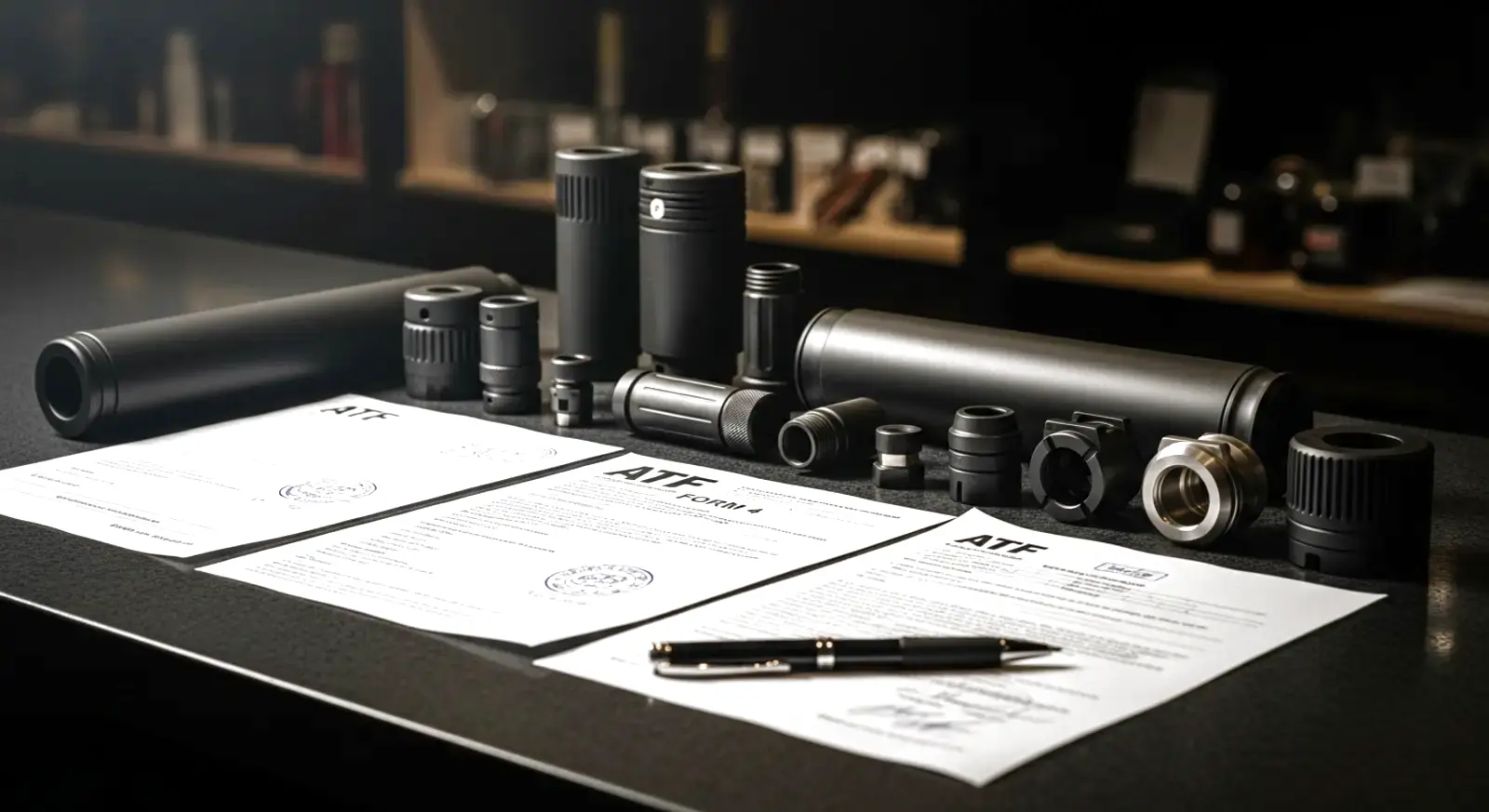
The NFA Registration Ruling: What FFL Dealers Should Do Now
Keep filing Form 4s. This ruling isn't a blanket instruction to release NFA items. As reported, on August 5, 2026, the Northern District of Texas issued a 66-page opinion and final judgment in Silencer Shop Foundation v. ATF, No. 6:25-CV-056-H, consolidated with Jensen v. ATF. Judge James Wesley Hendrix held key NFA registration and advance-approval requirements unconstitutional as applied to suppressors, short-barreled rifles, short-barreled shotguns, and any other weapons. As reported, the court's seven-day stay expired on August 13, 2026 and the injunction is now in effect, and no notice of appeal appeared on the docket as of August 25, 2026. But protection isn't nationwide. The appeal window had not closed, and a later filing or order could change what is operative. Before changing a transaction, verify the current docket, ATF guidance, and your specific facts with qualified counsel.
What the court decided, and why
The court's logic starts with Congress's Article I taxing power, not the Second Amendment. As the opinion explains, the Supreme Court upheld the NFA registration system in Sonzinsky v. United States in 1937 as a system that helped collect a tax. The district court did not decide the plaintiffs' Second Amendment claims.
As reported, the One Big Beautiful Bill Act of 2025 reduced the NFA making and transfer taxes to $0 for suppressors, short-barreled rifles, short-barreled shotguns, and any other weapons, effective January 1, 2026. Citing NFIB v. Sebelius, the court reasoned that a $0 tax produces no revenue. In the court's view, once those taxes stopped raising revenue, the registration and advance-approval provisions that supported their collection lost their constitutional foundation for those four categories. Verify the governing statutes and the opinion's application with counsel before relying on that reasoning in a transaction.
This was not a Second Amendment decision
The result turns on enumerated powers and the tax-collection rationale for the NFA provisions at issue. The court expressly did not reach the Second Amendment claims. That distinction matters because an appellate court could evaluate the tax-power analysis without deciding whether the covered items are protected arms.
The stay and who is actually covered
As reported, the court stayed its injunction for seven days so the government could seek appellate relief. That stay expired at 12:01 a.m. Central Time on August 13, 2026, and no higher court extended or replaced it, so the injunction is now in effect. As of August 25, 2026, no notice of appeal appeared on the district-court docket. The government's appeal window had not yet closed, however, and a later filing or a Fifth Circuit stay could still change what is operative. Check the docket, current ATF communications, and counsel before acting.
The judgment is not nationwide. As reported, its protection reaches the named plaintiffs and, where the final judgment applies, their current and future members, agencies, subdivisions, and customers. Plaintiffs included gun owners, manufacturers, dealers, rights organizations, and fifteen states. Residence in one of those plaintiff states may not by itself answer whether a person or transaction is protected, while residence in a non-plaintiff state alone provides no protection.
Coverage is transaction-specific
A customer saying they are a member of an organization, live in a plaintiff state, or bought from a protected business is not enough for your counter staff to make a legal determination. Read the final judgment and verify the party, membership, customer, item, and stay questions with counsel.
What does NOT change for your dealership
Do not change your NFA transfer process based on a headline. Until ATF or qualified counsel tells you that a specific transaction can proceed differently, keep filing Form 4s, waiting for approval, and maintaining your NFA entries in the A&D Book exactly as before.
- Machineguns and destructive devices. As reported, these categories retain their $200 making and transfer taxes and remain under the full NFA system. Verify the current tax and process with ATF or counsel.
- Your SOT. The special occupational tax for NFA dealers, manufacturers, and importers was retained. The ruling does not tell an FFL to drop its SOT. Review the current requirements in our Class 3 and NFA compliance guide, then verify them with ATF or counsel.
- Form 4473 and NICS. The Gun Control Act, Form 4473, NICS checks, prohibited-person rules, and dealer licensing requirements are untouched by this ruling. Verify how they apply to each transfer with counsel or ATF.
- Your A&D Book. Acquisition and disposition records remain part of your licensed operation. Keep every NFA item accurately recorded and reconciled.
- State and local law. The federal judgment does not answer separate state or local restrictions. Confirm every applicable layer before completing a transfer.
Keep the counter consistent. No item leaves inventory because a customer shows you a social-media post or a copy of the opinion. Document the authority you relied on. Give staff a clear escalation path. Preserve the normal point of sale and compliance trail.
How this fits the $0 tax change dealers already absorbed
As reported, dealers had already adjusted to the January 1, 2026 change that set the making and transfer taxes at $0 for the four covered categories. That change affected the payment amount, but dealers generally continued using the NFA registration and advance-approval workflow while the government treated those provisions as operative. See our dealer summaries of the $0 NFA tax stamp and broader NFA reform in 2026, and verify current requirements with ATF or counsel.
The new ruling asks a different question: whether Congress can keep the tax-collection machinery for categories on which, as reported, the tax now raises $0. That makes this the second major NFA operational shakeup reported within roughly one year. It does not mean the first change automatically erased registration, and it does not make every pending transfer immediately releasable.
Clean records are the practical advantage. A dealer with reconciled inventory, complete forms, and a clear audit trail can follow the existing process while a stay is in place, then adapt if ATF issues new instructions or the appeal changes the result. An electronic A&D Book can make that transition easier without guessing what the law will do next.
What to watch next
First, watch the appeal window. As of August 25, 2026, the stay had expired, the injunction was in effect, and no notice of appeal appeared on the docket. But the window to appeal had not yet closed, so confirm the current docket before treating that posture as settled. Second, watch for any later order. A new filing, a Fifth Circuit stay, or an appellate ruling could still affirm, narrow, reverse, or pause the district court's remedy.
Third, watch formal operational guidance. As reported, NSSF issued guidance concerning NFA transfers on August 17, 2026. Industry guidance can help identify issues, but it does not replace the final judgment, an appellate order, ATF instructions, or advice from your counsel.
Keep the process you can defend. Continue Form 4 submissions and normal A&D Book procedures unless current, transaction-specific authority says otherwise. Train staff to escalate questions instead of improvising. To see how e4473 keeps that record trail together, request an e4473 demo.
Frequently asked questions
Can my shop stop filing Form 4s because of this ruling?
Not based on the headline alone. Even with the injunction in effect, its protection is not nationwide and coverage is transaction-specific. Keep filing Form 4s and following the existing approval process until current ATF instructions or qualified counsel confirms that a particular transaction is covered and can proceed differently. Check the docket and appeal status before every process change.
Did the court strike down the NFA under the Second Amendment?
No. The court relied on Congress's Article I taxing power and did not decide the Second Amendment claims. Its reasoning, as reported, was that registration and advance approval could no longer rest on tax collection for four categories whose making and transfer taxes had been reduced to $0. Verify the opinion's application with counsel.
Which NFA items does the ruling address?
The ruling addresses suppressors, short-barreled rifles, short-barreled shotguns, and any other weapons. As reported, machineguns and destructive devices retain their $200 taxes and the full NFA process. Verify current classifications, taxes, and procedures with ATF or counsel.
Does living in one of the fifteen plaintiff states mean a customer is covered?
Not necessarily. The injunction is not nationwide, and residence alone may not establish that a customer or transaction falls within the final judgment. Coverage may depend on the named parties, organizational membership, agencies, subdivisions, customers, the stay, and the exact transaction. Have counsel review the judgment.
Does the ruling eliminate my SOT requirement?
No. As reported, the special occupational tax for NFA dealers, manufacturers, and importers was retained. Do not surrender or stop maintaining an SOT because of this case. Verify your current obligations with ATF or counsel.
Are Form 4473, NICS, and A&D Book requirements affected?
No. The Gun Control Act, Form 4473, NICS, prohibited-person rules, dealer licensing, and A&D Book duties were not decided by this ruling. Keep those controls in place and verify any transaction-specific question with ATF or counsel.
What should I tell a customer who wants an NFA item released now?
Tell them your shop is following the currently operative process while you verify the judgment, stay, appeal, ATF guidance, and whether their transaction is actually protected. Do not let counter staff decide legal coverage from a membership card, address, news story, or social-media post.
Has the government appealed the ruling?
As of August 25, 2026, no notice of appeal appeared on the district-court docket. The appeal window had not yet closed, though, and if an appeal were filed the Fifth Circuit could leave the judgment in place, narrow or reverse it, or stay the injunction. Monitor the current docket and formal ATF guidance, and have counsel approve any change to your transfer process.
Keep your NFA records ready for either outcome
The appeal may change the process, but clean records give your dealership room to adapt. e4473 connects Form 4473 workflows with an electronic A&D Book so your team can keep transfers consistent, inventory reconciled, and records ready for review while you follow current ATF and legal guidance.