
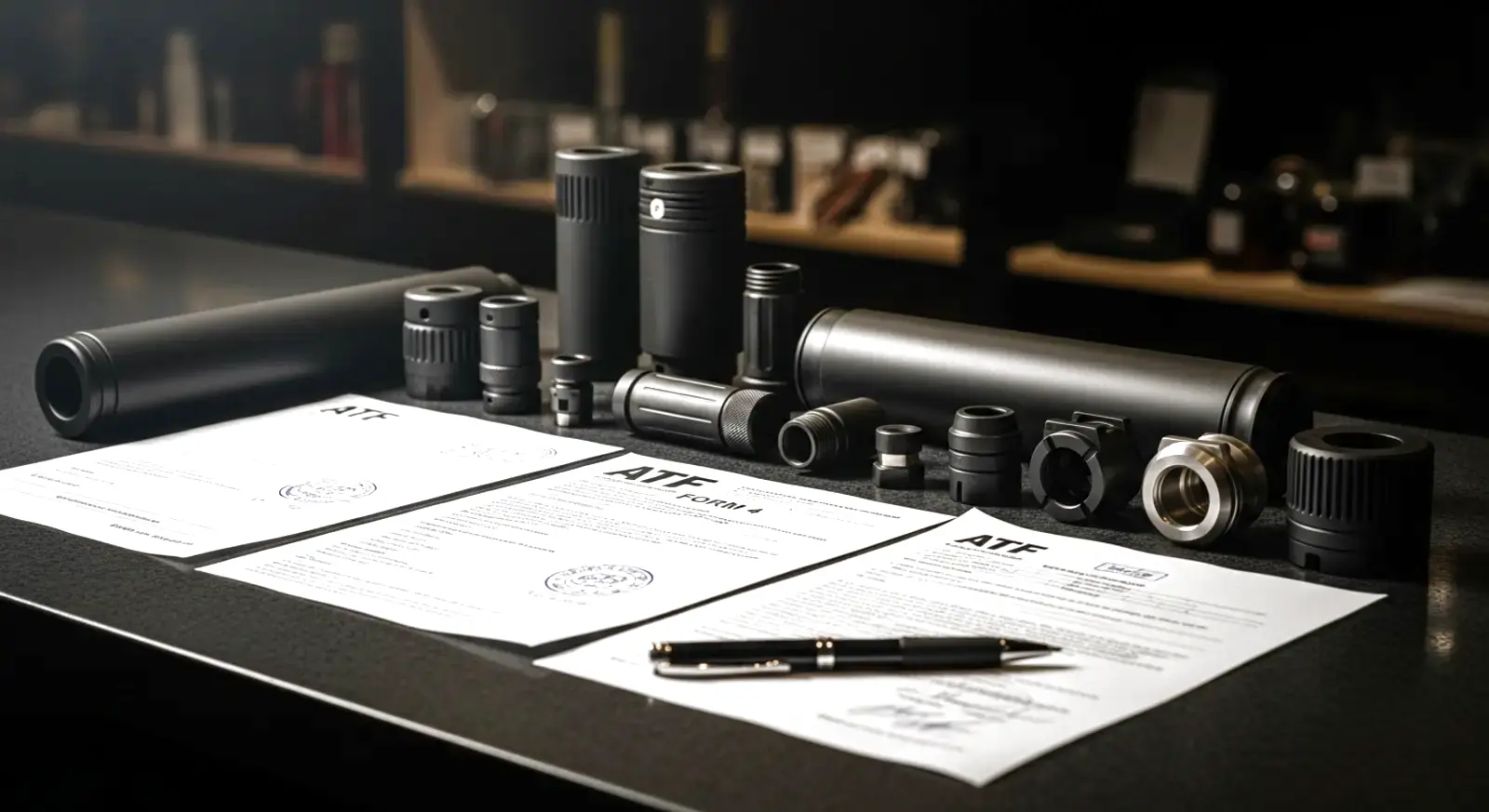
The $0 NFA Tax Stamp: A Dealer's Guide to Suppressor and SBR Transfers in 2026
As of January 1, 2026, the federal transfer and making tax on suppressors, short-barreled rifles, short-barreled shotguns, and any-other-weapons dropped from $200 to $0. The tax is gone; the process is not. Every one of those items still requires an approved NFA registration before your customer takes possession, and the demand surge the change unleashed is now working through your counter. Here is what changed, what did not, and how to keep transfers clean while volume climbs.
What actually changed on January 1, 2026
The 2025 federal budget law reduced the National Firearms Act transfer and making tax to $0 for suppressors, short-barreled rifles, short-barreled shotguns, and any-other-weapons, effective January 1, 2026. Machine guns and destructive devices were not included; their transfer tax remains $200.
Everything else about the NFA is intact. The items are still NFA-regulated, still require an approved ATF Form 4 to transfer to a customer or Form 1 to make, still move dealer-to-dealer on a Form 3, and still end with a Form 4473 and NICS check at pickup. The stamp on the approved form now reads $0, and customers still cannot take possession until it arrives.
Buying a suppressor yourself? The short answer
For buyers, not stores
This guide is written for gun stores. If you are the customer: yes, the federal tax is $0 as of January 1, 2026, but you still submit a Form 4 through your dealer, wait for ATF approval, and complete a Form 4473 with a background check at pickup. Your dealer handles the paperwork — you don't need any software, just a licensed dealer (FFL/SOT) and patience for the approval wait. Everything below is about how the store side of that process works.
The three questions every customer asks
Do I still need a tax stamp? Yes. The registration and the approved Form 4 are still required. The tax is $0, but there is no such thing as a suppressor or SBR transfer without an approved form.
Do I still have to wait? Yes. The ATF processes forms in the order received, and the surge in submissions since January has kept queues long. Set expectations honestly at the counter; nothing about the tax change speeds up approvals.
Is an SBR cheaper now too? Yes. The $0 tax applies to short-barreled rifles and shotguns the same as suppressors, on both the Form 4 transfer and the Form 1 build. Machine guns and destructive devices still carry the $200 tax.
The dealer workflow, end to end
- Inventory arrives on a Form 3 from the manufacturer or distributor and goes straight into your electronic bound book software as an acquisition.
- The customer picks their item and submits the Form 4, individual or trust, through eForms. Electronic filing is meaningfully faster than paper.
- The item stays in your safe and on your books while the Form 4 is pending. Pending NFA inventory that is not tracked cleanly is where reconciliation problems start.
- On approval, the customer comes in, completes a Form 4473, passes the NICS check, and you log the disposition.
For the full dealer-side view of Forms 1, 3, and 4 and where the stamp lands in each, see our guide to the NFA tax stamp process for dealers.
More volume, same inspection standard
The $200 stamp used to filter the market down to dedicated buyers. At $0, suppressors are becoming an attach-rate item on rifle sales, and stores that treated NFA as a few transfers a month are running a few per week. The ATF inspection standard did not loosen to match. Every Form 3 arrival, every pending Form 4, and every pickup 4473 has to reconcile against your A&D Book, and the gap between sold and delivered inventory is wider and busier than it used to be.
State rules still apply on top of federal law. A handful of states prohibit or restrict suppressors and short-barreled rifles regardless of the federal tax, so the counter conversation always starts with where the customer lives. For a state-level example of how the change is playing out, see our guide to selling suppressors in Texas after the $0 tax stamp, and for the in-state manufacturing scene, our roundup of Texas-made suppressors.
Keeping NFA volume clean
Keep the NFA side of your counter on the same records as everything else. e4473's ATF 4473 software is built into the Bravo Store Systems point of sale. Form 3 arrivals post as acquisitions in the electronic bound book. Pending Form 4 inventory stays visible instead of getting scattered across a whiteboard. At pickup, the 4473 is completed field by field and the disposition posts automatically. You get one system and one company to call, backed by the 100% ATF compliance guarantee. Already using FastBound for NFA records? See how the FastBound alternative compares.
Frequently asked questions
Is the NFA tax stamp really $0 in 2026?
Yes, for suppressors, short-barreled rifles, short-barreled shotguns, and any-other-weapons, effective January 1, 2026. Machine guns and destructive devices still carry the $200 transfer tax.
Do customers still need an approved Form 4 with a $0 tax?
Yes. The registration requirement is unchanged. The customer cannot take possession until the ATF approves the Form 4, regardless of the tax amount.
Did the $0 tax stamp change ATF wait times?
Not for the better. The ATF processes applications in the order received, and the surge in submissions since January 2026 has kept processing times extended. There is no way to expedite an application.
Does the $0 tax apply to SBR builds on a Form 1?
Yes. The making tax for short-barreled rifles, short-barreled shotguns, suppressors, and any-other-weapons is also $0. The Form 1 approval is still required before the build.
What does the customer complete at NFA pickup?
The same as any firearm transfer: a Form 4473 and a NICS background check after the Form 4 is approved. The dealer then logs the disposition in the A&D Book and releases the item.
NFA volume is up. Keep every transfer clean
See how e4473 ties Form 3 arrivals, pending Form 4 inventory, and the pickup 4473 to your Bravo point of sale and A&D Book. You'll get one record to check before an inspection.