
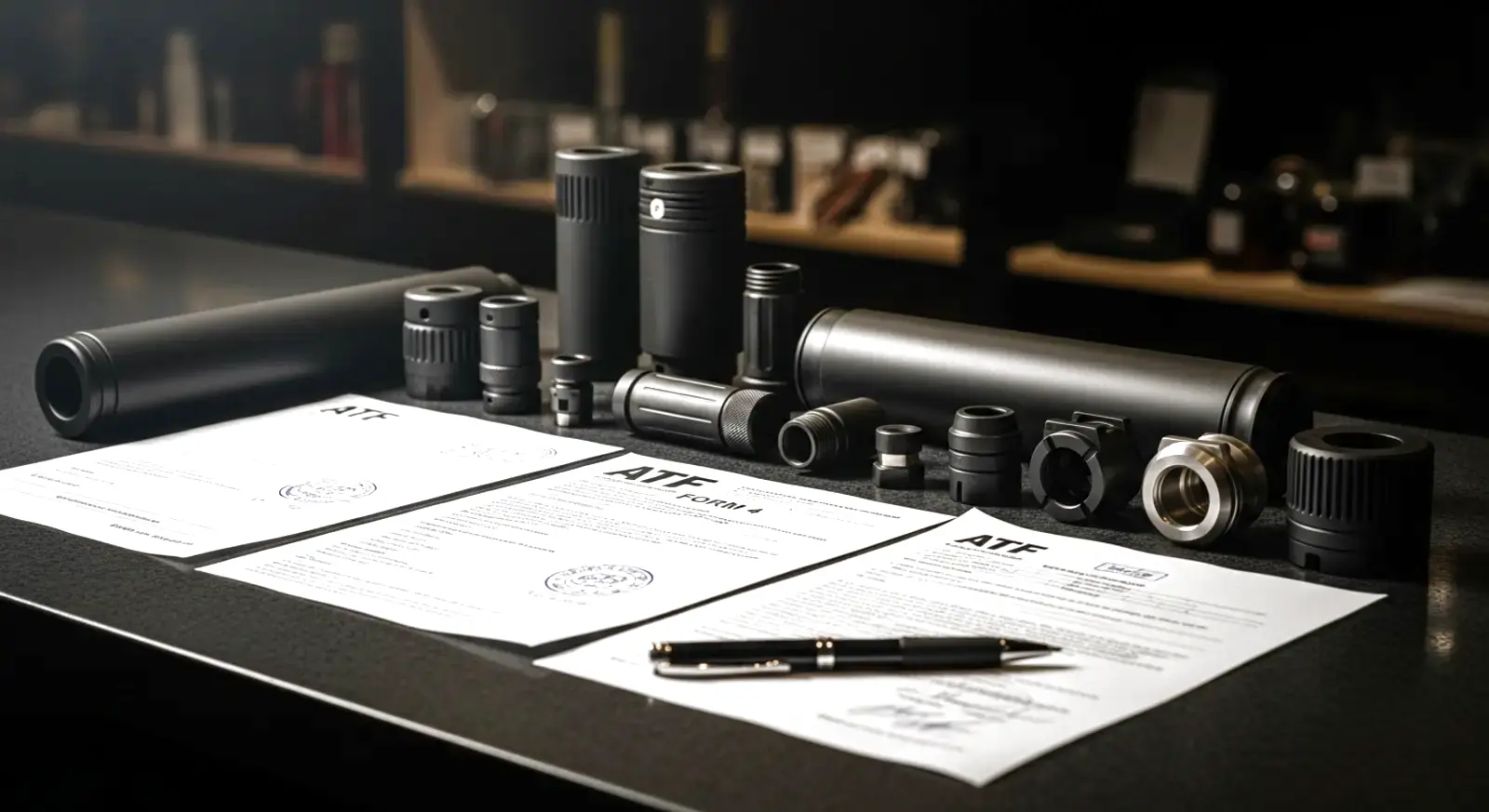
Texas-Made Suppressors: Who Builds Them and What the Law Really Says
Every Texas-made suppressor still transfers through the federal NFA process. That includes cans from Texas Silencer Company in Weatherford, Lone Star Silencer in Midlothian, and Warsaw Creek Armory in Kaufman County. The confusion comes from HB 957, the 2021 Texas Firearm Suppressor Act, which tried to exempt suppressors made and kept in Texas from federal regulation. Here's what the law actually changed and what it means at your counter.
Why "Texas-made" became a search in the first place
Two changes are driving the questions at your counter. Texas passed HB 957 in 2021, declaring that a suppressor manufactured and kept in Texas isn't subject to federal law or federal regulation. Then the federal NFA tax on suppressors dropped to $0 on January 1, 2026, and suppressor demand jumped everywhere, with Texas, one of the most suppressor-friendly states, at the front of it. Buyers want to know who builds suppressors here and whether buying Texas-made lets them skip the federal paperwork.
The short answers: several manufacturers build them, and Texas-made doesn't skip the paperwork. Federal courts have so far declined to uphold state-level NFA exemptions like HB 957, and the ATF's position is that the National Firearms Act applies regardless of where a suppressor is made or stays. A Texas-made suppressor transfers exactly like any other: an approved Form 4, then a Form 4473 and NICS check at pickup. Our Texas suppressor guide walks through that process step by step.
Buying, not selling? What "Texas-made" means for you
For buyers, not stores
If you're shopping for a suppressor: a Texas-made can transfers exactly like any other — your dealer files the Form 4, you wait for ATF approval, and you complete a Form 4473 with a background check at pickup. "Made in Texas" does not skip the federal process, and building your own without an approved Form 1 remains a federal felony. The tax is $0 in 2026 either way. The rest of this page looks at the manufacturers themselves and what the law means for the stores that stock them.
Suppressor manufacturers based in Texas
Texas does not host the largest national suppressor brands, most of which are headquartered in states like Utah and Georgia, but it has a real bench of in-state manufacturers. A sampling of shops designing and building suppressors in Texas:
- Texas Silencer Company (Weatherford). A hunting-focused maker whose silencers are designed and built entirely at its Weatherford facility, with a product line aimed at hunters rather than tactical buyers.
- Lone Star Silencer (Midlothian). A precision-oriented manufacturer south of Dallas building American-made suppressors marketed on accuracy and sound reduction for demanding shooters.
- Warsaw Creek Armory (Kaufman County). A small shop southeast of Dallas producing rimfire and centerfire suppressors along with integrally suppressed barrels.
- Dark Horse Suppressors (West Texas). A smaller West Texas maker selling direct and through dealers.
This list is not exhaustive. Texas issues a large number of Type 07/Class 2 licenses, and new SOT shops open regularly, so the in-state roster keeps growing. If you are a dealer, that also means local wholesale relationships are easier to build here than in most states.
The Austin factor
The biggest name in the Texas suppressor economy is not a manufacturer at all. Silencer Shop, based in Austin, is the nation's largest suppressor distributor and runs the kiosk network many dealers use for fingerprints and eForms. A large share of all US suppressor transfers touches Texas on the way to the customer.
What HB 957 actually says, and where it stands
HB 957, the Texas Firearm Suppressor Act, took effect September 1, 2021. It repealed the state criminal offense for possessing a suppressor and declared that a suppressor manufactured in Texas that remains in Texas is not subject to federal law or regulation. It also directed the Texas Attorney General to seek a court ruling protecting that framework.
That court test happened. Texas sued the ATF over the law, and the federal courts declined to block NFA enforcement against Texas-made suppressors. As of this writing, no court has upheld a right to make or possess an unregistered suppressor under HB 957, and building one without an approved ATF Form 1 remains a federal felony no matter what state law says. The practical rule for buyers and dealers alike: treat every suppressor, Texas-made or not, as a full NFA transfer.
For your store, the result is simple. One process covers everything: Form 3 in from the manufacturer or distributor, Form 4 out to the customer, 4473 and NICS at pickup. Our $0 tax stamp dealer guide covers how that flow changed, and did not change, when the tax went to zero.
The dealer angle on Texas-made
"Made in Texas" sells in Texas. Stocking in-state brands next to the national names gives your counter a story that resonates with local buyers, and shorter supply lines from an in-state manufacturer can mean faster Form 3 turnaround than shipping from out of state. The compliance load is identical either way: every arrival is an acquisition in your A&D Book, every pending Form 4 needs tracking, and every pickup ends with a 4473.
As NFA volume grows, missed records are where your store gets hurt. See our guides to the NFA tax stamp process for dealers and Class 3/NFA compliance, and if you sell in Texas, our Texas FFL compliance guide covers the state-side rules.
Frequently asked questions
Who makes suppressors in Texas?
In-state manufacturers include Texas Silencer Company in Weatherford, Lone Star Silencer in Midlothian, Warsaw Creek Armory in Kaufman County, and Dark Horse Suppressors in West Texas, among a growing number of smaller Type 07/Class 2 shops. Austin is also home to Silencer Shop, the nation's largest suppressor distributor.
Does a Texas-made suppressor have to be registered under the NFA?
Yes. HB 957 declared Texas-made suppressors that stay in Texas exempt from federal regulation, but federal courts have declined to uphold that exemption, and the ATF continues to enforce the NFA. Every suppressor transfer, Texas-made or not, requires an approved Form 4 (or Form 1 for a build), plus a Form 4473 and NICS check at dealer pickup.
Can I build my own suppressor in Texas without a tax stamp?
No. Making a suppressor without an approved ATF Form 1 is a federal felony regardless of Texas law. The making tax is $0 as of January 1, 2026, but the approval itself is still required before the build.
Are suppressors cheaper to buy in 2026?
The federal transfer tax on suppressors dropped from $200 to $0 on January 1, 2026, so the total cost of ownership fell by that amount. The suppressor itself, dealer transfer fees, fingerprints, and photos still apply, and the ATF approval wait is unchanged.
Why should a Texas gun store stock Texas-made suppressors?
Local branding sells at a Texas counter, and in-state manufacturers can mean faster Form 3 shipping and easier wholesale relationships. Compliance is identical to any other suppressor: acquisition in the A&D Book on arrival, tracked while the Form 4 is pending, and a 4473 with a NICS check at pickup.
Selling suppressors in Texas? Keep every NFA transfer clean
e4473 ties Form 3 arrivals, pending Form 4 inventory, and the pickup 4473 to your Bravo Store Systems point of sale and A&D Book, so growing suppressor volume never turns into inspection findings.